5 Useful Wild Weeds From Your Backyard
I wandered the backyard this morning before work to see what was popping up in my central Maine gardens. With these past few rainy days of spring, plants are slowly pushing through the soil. Truth be told, I was really just hoping the dandelions were up enough for a little snack. I was in luck! I was able to forage enough leaves for a quick sauté with garlic and have enough for a fresh tea later in the day.
I love this time of year! This first taste of wild greens effectively shook off the last clutches of winter. Spring, for me, has officially arrived. I will be foraging the backyard from now until after snowfall, collecting for food and herbal medicine. The following herbs, in no particular order, are just a few I encourage to grow where they like.
- Dandelions (Taraxacum officinale, Asteraceae):
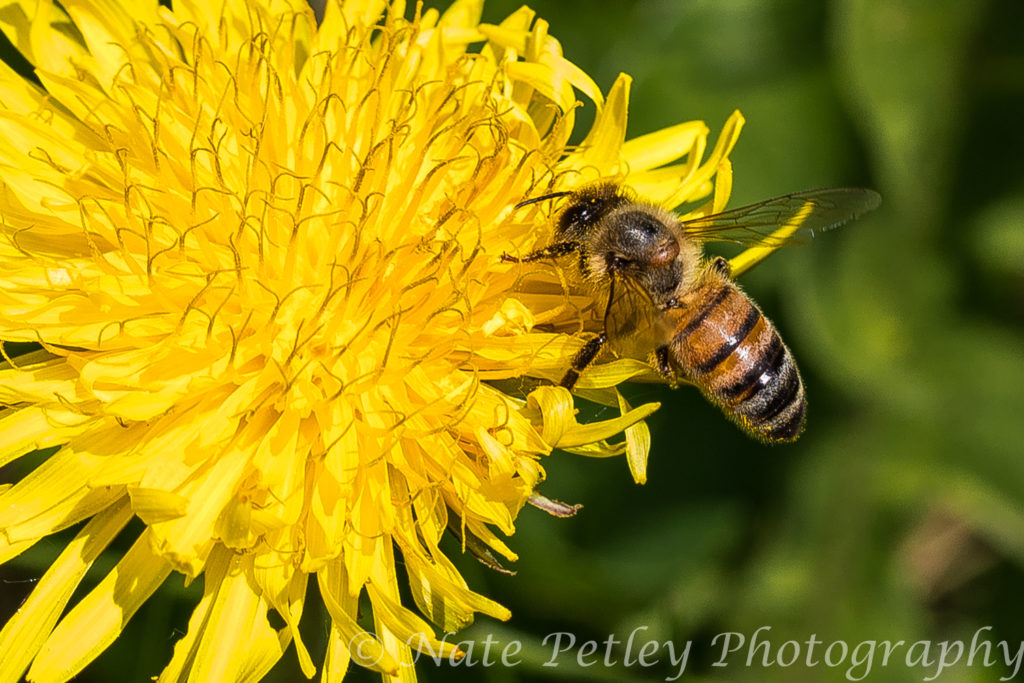
 Why struggle and fight with the dandelions? As the saying goes, “If you can’t beat ‘em, join ‘em!” I say, “If you can’t beat ‘em, eat ‘em!” Dandelions are one of the first flowers in spring that provide food for bees and other insects. This in turn keeps them around later when our vegetable gardens are in bloom with peas, beans, tomatoes, and squash. It just so happens that these dandelions are also one of our sources of wild food!
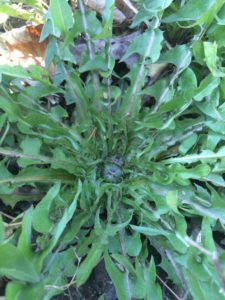
The entire dandelion plant is edible – leaves, roots, flowers, and buds. The leaves can be harvested as soon as they start growing and added fresh to salads, sautéed, or when they get larger cooked as a potherb, much like one cooks spinach. The leaves are most tender (and less bitter) before flowering and easy to collect by snipping off individual leaves at the base, thereby preserving the root and crown to produce more leaves and flower buds. They are also easier to clean this way. The leaves are a powerful source of fiber, vitamins (including A and C), and minerals (including calcium and potassium). Medicinally, the bitterness of the leaves stimulates the appetite and supports the entire digestive system. They have a special affinity to the kidneys and act as a useful diuretic; they are so potassium-rich that they replenish faster than depleting potassium, unlike most diuretics.
 The roots are useful as a liver tonic and digestive aid. They can be harvested late fall after the first killing frost or early spring before much leaf growth has developed. I either decoct them into tea (download a free quick guide here) or roast them and use all winter as a flavorful and rich roasted dandelion root beverage. It can be used as a, dare I say, coffee substitute. (Click here to learn how to harvest the root and make the brew!)
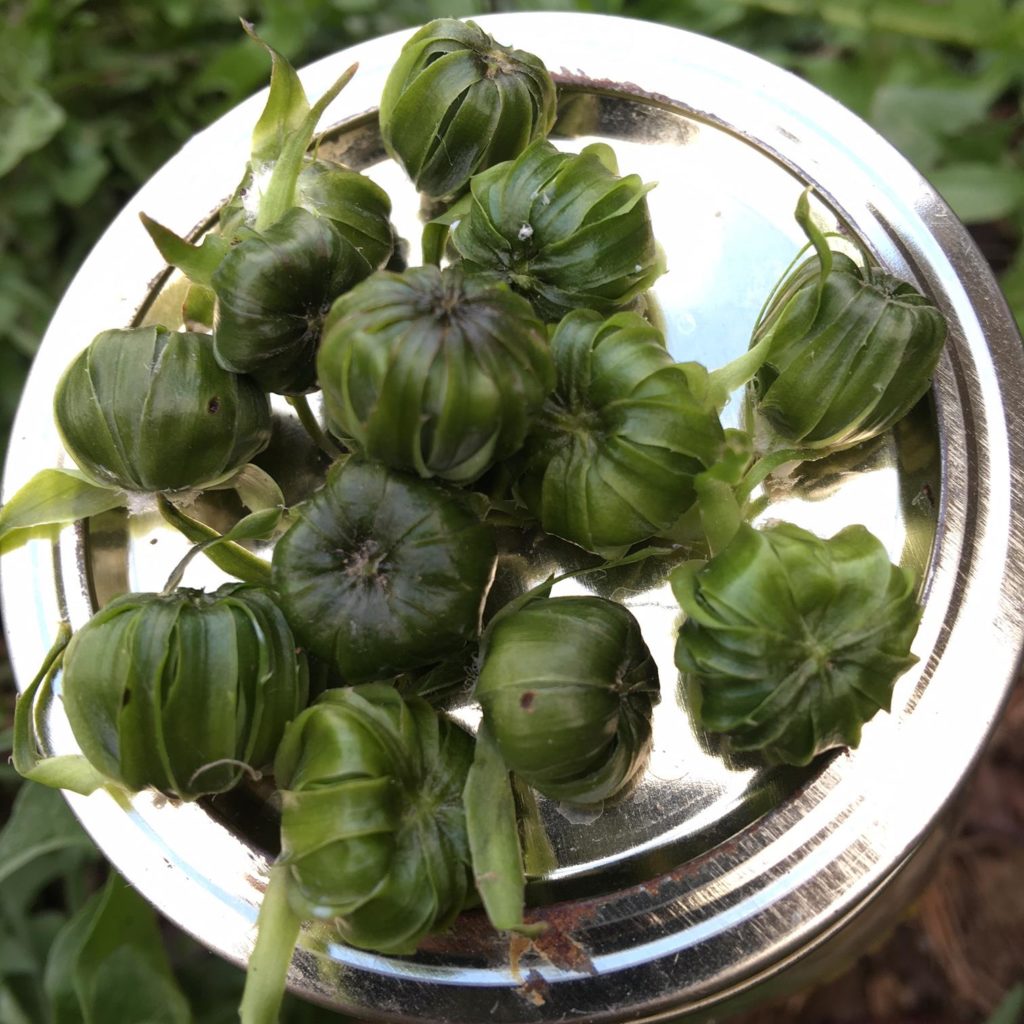
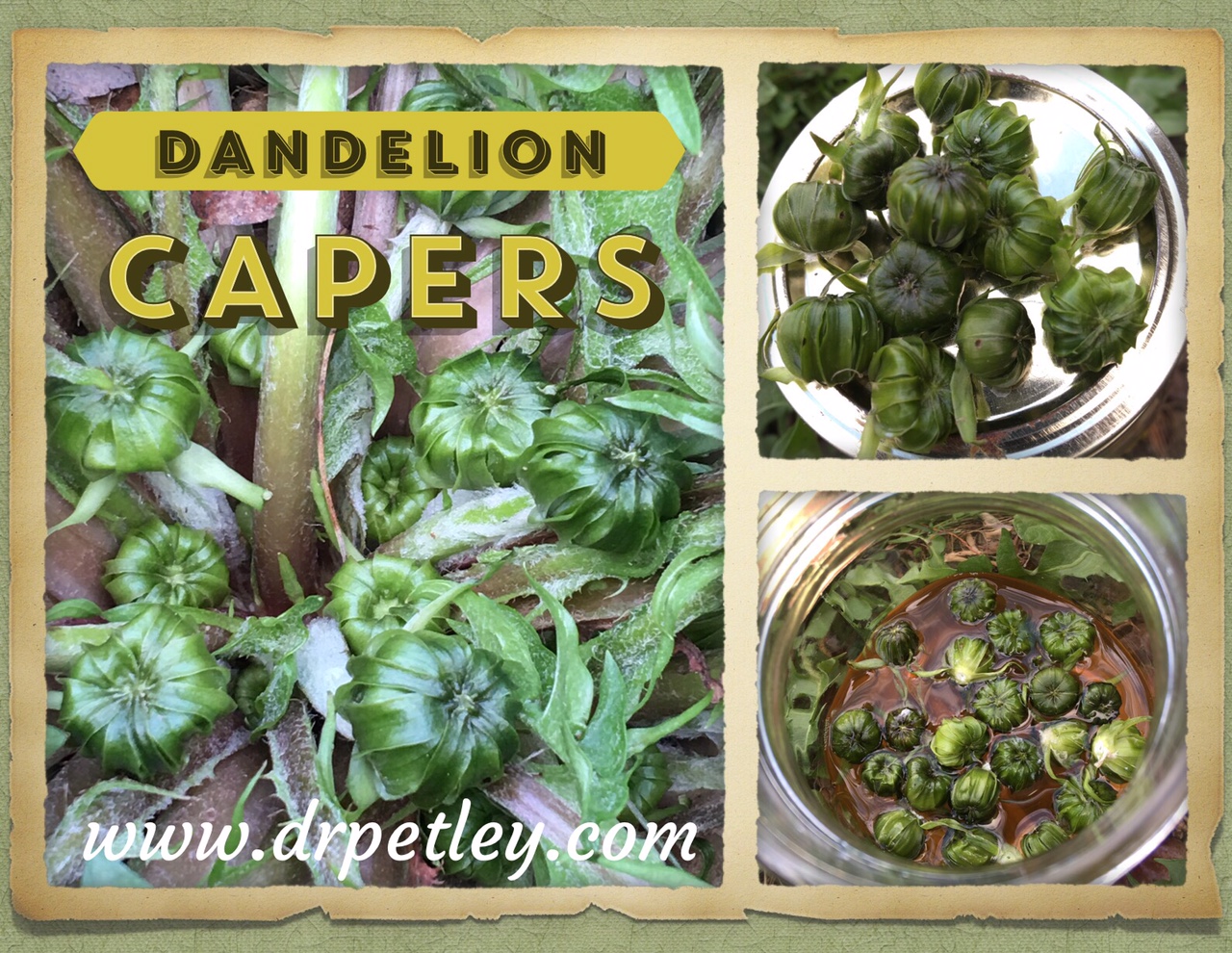
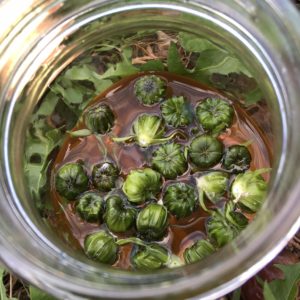
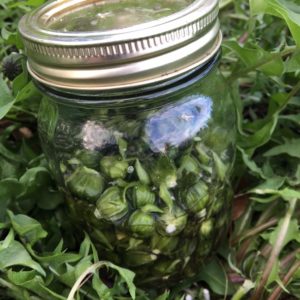
The flower buds can be made into delicious wild capers (click here to learn how). Be sure to allow some of the buds to develop into flowers for the insects. The flowers can be dipped in batter and deep-fried or fermented into a tasty wine.
- Yarrow (Achillea millefolium, Asteraceae)
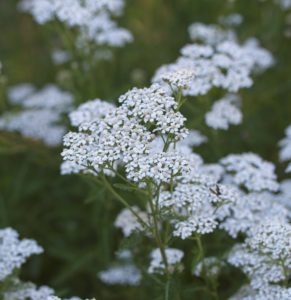 Yarrow is an excellent addition to the flower garden or along the lawn edge. They can grow one to two feet tall and have beautiful white flowers. I look for the small highly dissected leaves in my lawn and transplant them into my garden in large masses. Each year I harvest the flowers (snipping just blow where the flowers join the stem). Of course, I leave plenty for the bees and butterflies and for self-seeding. Medicinally, it has a long history of use as a diaphoretic (causing the body to raise its own thermostat triggering the body to sweat) and antimicrobial, making it shine when used for the cold and flu. Historically, it has been added to formulas for hemorrhoids. Because the herb is quite bitter, I prefer making a tincture from either fresh or dried flowers. It can also be used topically as a poultice for its styptic and anti-inflammatory properties. Poultices are made by chewing on the leaves or flowers (or macerate in a mortar and pestle) until it is a pulpy, watery mush, and in this case,applied to minor scratches to stop bleeding. When hiking, I always ask my friends in need if they’d like to chew and spit the yarrow on their bleeding scrapes, or shall I. They never seem to mind or complain about that bitterness!
- Common Plantain (Plantago major, Plantaginaceae)
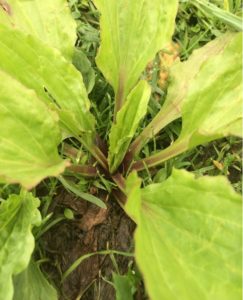
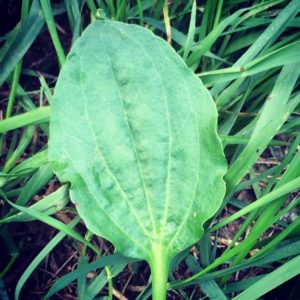 Plantain is a non-native, well-established wild plant, appropriated dubbed “white man’s footprints” due to the fact that it was introduced when the early settlers arrived from Europe and it grew wherever they walked. It is a plant that grows best in disturbed soil (look for them in lawns and gravel driveways). This is an herb with endless uses as a poultice. It is soothing and cooling to bug bites, sunburns, poison ivy, and minor scrapes and scratches. Simply chew on a fresh leaf (or macerate in a mortar and pestle) until it is a pulpy, watery mush. Then simply smear some on the afflicted skin. The leaves can also be made into a tea and sipped on for quick heartburn relief or used as a mouthwash for sore gums and cankers. The seeds can be chewed as a source of healthy oils and fiber – this is our version of Plantago ovata, the source of commercially-grown psyllium seed.
- Red Clover (Trifolium pratense, Fabaceae)
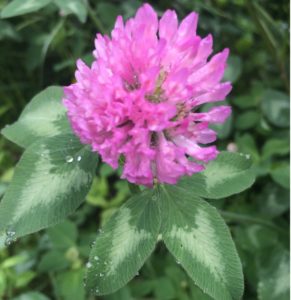 Clover is commonly found in lawns and gardens – just look for the signature three (and if you’re lucky four) leaves. It is commonly used as a cover crop in fields to help suppress other weeds and then easily turned with a spade or tilled. Clover, being a member of the legume family, is beneficial to the soil and surrounding plants as they are nitrogen-fixers. The roots contain nodes that work with symbiotic bacteria in order to capture nitrogen in the air and make it readily available to the plant.
Clover blossoms are attractive to many insects including butterflies and wild bees. Harvest after the morning dew has dried and either use fresh or quickly dry for use as a winter tea (be sure that the blossoms do not brown in the drying process). They are also make fun additions to salads for a little color and touch of sweetness. I love adding whole blossoms to my sun teas. The leaves are rich in minerals and make a tasty tea. Medicinally, the flowers are used as a liver and blood cleanser and for skin conditions such as eczema. They are also rich in phytoestrogens making them a common herb to add to formulas addressing the menstrual cycle and menopause.
- Goldenrod (Solidago spp., Asteraceae)
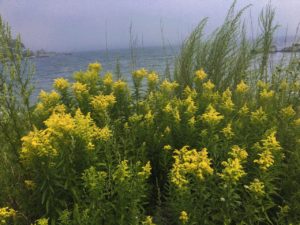 While often considered the source of all fall allergies, this showy late summer/fall flower is unfairly blamed while the inconspicuous common ragweed (Ambrosia artemisiifolia) goes unnoticed. Both are in the same Asteraceae family, but in different tribes (Astereae vs Heliantheae) which is why they look very different from each other. More importantly, the pollen of goldenrod is sticky so that it is readily carried to other flowers by way of bees and other pollinators, not by air. The pollen of ragweed, however, is designed to be airborne and is not spread by bees; the plant produces an abundance of pollen that can be carried for miles in the wind. The goldenrod is an excellent plant to allow growing at the edge of the lawn and in the garden partly for its simple beauty but also because it is one of the last sources of food for bees. Medicinally, the flowers can be made into a tea or tincture and used for mild kidney and lung complaints due to its diuretic, anti-inflammatory, and antiseptic properties. Unlike popular belief, goldenrod can actually be used for allergy season.
Dr. Nate Petley is a naturopathic doctor and clinical herbalist. He offers a three-year herb apprenticeship in Maine and lectures throughout New England sharing his expertise in naturopathic and botanical medicine. Dr. Petley blends the art and science of herbalism in his clinic and classroom, relying on his 20 years of experience studying, wildcrafting, and making herbal medicine. Information provided is for educational purposes only. It is not intended to diagnose, treat, cure or prevent any disease, nor is it a replacement for seeking proper medical attention.
To help keep this site full of information and no ads, please consider a one-time or continual donation to support this website and blog. Ads can slow down page loading, track your whereabouts, and are simply annoying to scroll over when reading an article. Click here to support.
Dr. Nate Petley | www.drpetley.com | 2019. All rights reserved. All text and photos are the property of Nathaniel Petley, ND.

You must be logged in to post a comment.