• Dr. Nate Petley - Harvesting Medicinal Plants - Herbal Preparations

    Dandelion Capers

    Dandelion Capers

    Nothing is more satisfying than foraging food from the backyard.  This spring I have been eating dandelion greens at least twice a day, sauteed in olive oil and garlic.  They are high in trace minerals, calcium, and iron, and vitamins A, C, and B6 – a very nutritious early spring addition to any meal.  Best of all, they are free!  Be sure to only collect from clean lawns and gardens that have not been sprayed with herbicides and pesticides.   
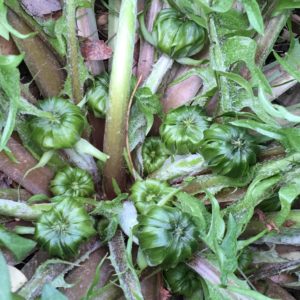
    Dandelion Flower Buds ~ Dr. Nate Petley
    Dandelion Flower Buds ~ Dr. Nate Petley

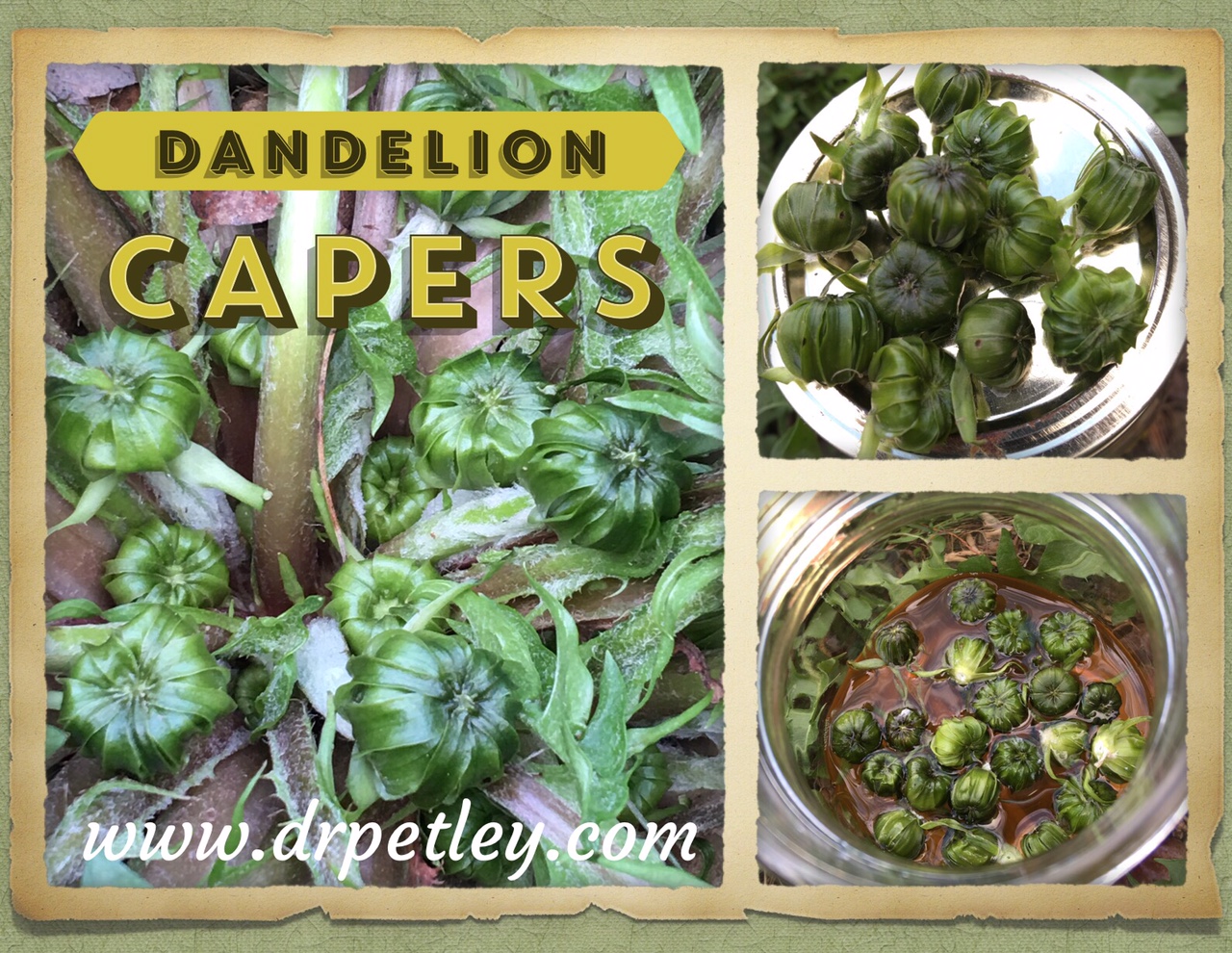
    Sure, us weed-eating folks do get quizzical looks when munching on things in the lawn.  While we won’t likely convince everyone to chow down on bitter dandelion greens, we might be able to prove their worth with this simple recipe utilizing the flower buds.  Next time you reach for capers in a recipe, try dandelion capers instead!  They add pizazz to salads and pasta dishes, and they are extremely easy to make.
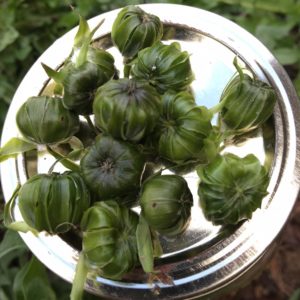
    Dandelion Flower Buds ~ Dr. Nate Petley
    Dandelion Flower Buds ~ Dr. Nate Petley

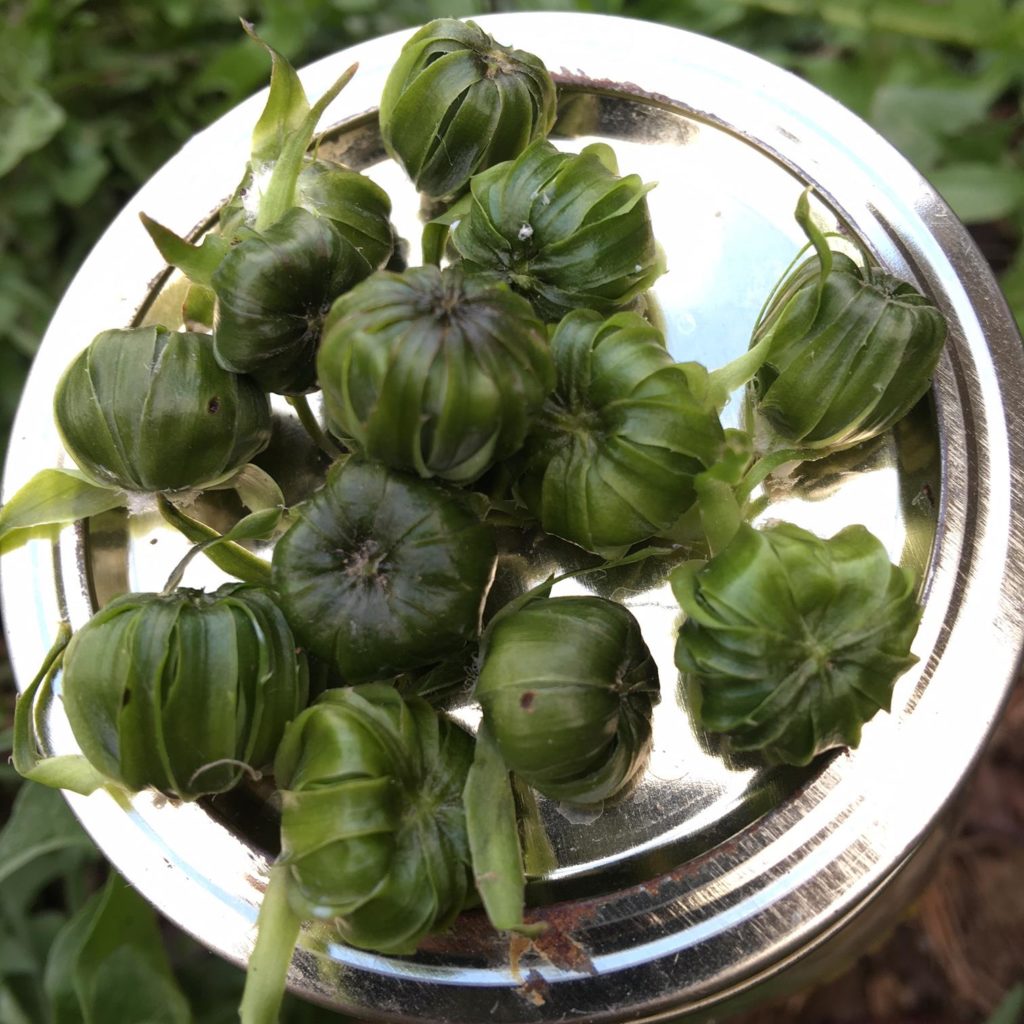
    Before the dandelion flowers open in spring, collect a handful or so of small buds (they should be bright green and almost spherical).  I pick a few of the buds from lots of different plants around the garden because dandelions are one of the earliest available flowers for bees and nectar-loving insects.  Please don’t mow, don’t spray, and don’t dig.
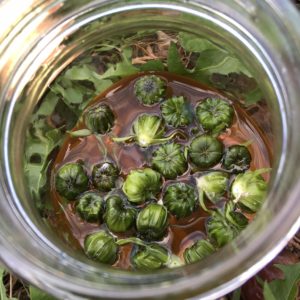
    Making Dandelion Capers ~ Dr. Nate Petley
    Making Dandelion Capers ~ Dr. Nate Petley

    Once you have collected a few, place them in a small jar and cover with vinegar (I use raw apple cider vinegar because after I eat the capers I use the leftover vinegar on salads).  Some online recipes suggest using dilute vinegar, but I use it straight up because dandelions are full of water which naturally dilutes the vinegar a little.  Add salt as desired – capers are traditionally salty so don’t be shy with the salt.  Cover and shake gently until the salt dissolves.  Let set about a week before tasting them; adjust the salt as needed.  They will last for several months in the refrigerator, except that I eat mine long before they ever get a chance to spoil.
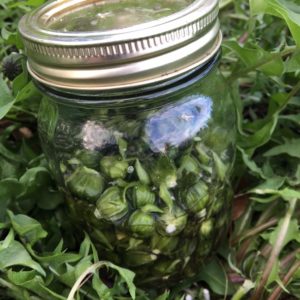
    Making Dandelion Capers ~ Dr. Nate Petley
    Making Dandelion Capers ~ Dr. Nate Petley

    Try some tasty variations on this simple recipe.  Add garlic, peppercorns, coriander seeds, dill, oregano, rosemary – you get the picture.  Also try different types of vinegar, like red wine, white balsamic, or homemade.

    Back to the dandelion greens… As soon as the snow melts and the dandelion leaves start to grow, pluck individual leaves from all around.  This is my preferred method of harvesting.  Growing up, we would take a knife and cut the entire rosette of greens.  Over the years I have learned that this only ensures a sink full of soil, leaf litter, and burrowing insects.  Now, I just pluck leaves for a cleaner harvest requiring only a few quick rinses before eating. 

    Dandelions: nutritious, delicious, and wild!  Happy harvesting!

     

    Dr. Petley
    Dr. Nate Petley, Naturopathic Doctor & Clinical Herbalist

    Dr. Nate Petley is a naturopathic doctor and clinical herbalist.  He offers a three-year herb apprenticeship in Maine and lectures throughout New England sharing his expertise in naturopathic and botanical medicine. Dr. Petley blends the art and science of herbalism in his clinic and classroom, relying on his 20 years of experience studying, wildcrafting, and making herbal medicine.

    Dr. Nate Petley  |  www.drpetley.com  |  2017. All rights reserved.  All text and photos are the property of Nathaniel Petley, ND.
  • Dr. Nate Petley - Herbal Preparations - Plant Wisdom

    The Medicinal Kitchen Cupboard

    Herbalism is something that begins at home.  It is the knowledge of treating ourselves with the healing power of herbs.  These herbs can be from far off exotic lands or those growing locally.  Here in Maine, the backyard is currently covered with a thick white blanket that has tucked the herbs in for a long winter’s rest.  This is the way of the land. 

    For Maine herbalists, however, this doesn’t end our ability to practice herbal medicine.  Even if we run out of all the preserved herbs from the warmer days of summer, we still have ample sources of highly medicinal herbs throughout the cold months of winter.  Herbalists know just where to look for the secret stash to sustain those in need and the journey takes us no further than the kitchen cupboard.  No matter where the herbalist is, there is always beneficial medicine found in the kitchen.    

    Kitchen herbs and spices are too often referred to as nothing more than culinary ingredients.  However, herbalists know there is a world of usage beyond the flavors these herbs provide.  The herbs and spices most notably stored in the spice cabinet are full of volatile oils that readily release their scent when crushed, steeped, or cooked.  These oils are not just aromatic, though, they are also medicinal.   Herbalists over the eons have learned how to harness these aromatic herbs to treat common complaints like an upset stomach, sore throat or common cold.   The same oregano that you used for dinner last night and the cinnamon you added to your breakfast this morning hold potent medicinal properties, when used correctly and appropriately. 

    Herbalism is the knowledge of how to, how much to, when to, and when not to use these herbs medicinally.  This knowledge is typically taught in herb apprenticeships where students receive not only academic knowledge but hands-on guidance.    

    Here is a short list of herbs that you likely know and might already have available in your kitchen cupboard.  The information provided is to introduce the wonders of the spice cabinet, not treat or diagnose any condition without the guidance of a practitioner trained in herbal medicine. 

    Ginger: This is a common rhizome that is easy to find fresh or dried.  Both work great but I mostly reach for fresh ginger. Here’s a tip to keep your fresh ginger around longer – store it in the freezer and when needed, simply grate or chop with a sharp knife.  Ginger is considered warming and anti-inflammatory making it a useful remedy for the winter chills or the common cold.  The use of ginger has been proven as an anti-nausea remedy and can be sipped as needed throughout the day for an upset stomach.  To make a tea, place one tablespoon of freshly chopped ginger in eight ounces of water.  Simmer on the stove for ten minutes.  Strain as you pour it into your favorite mug, unless you like to nibble on the potent ginger pieces as you drink.

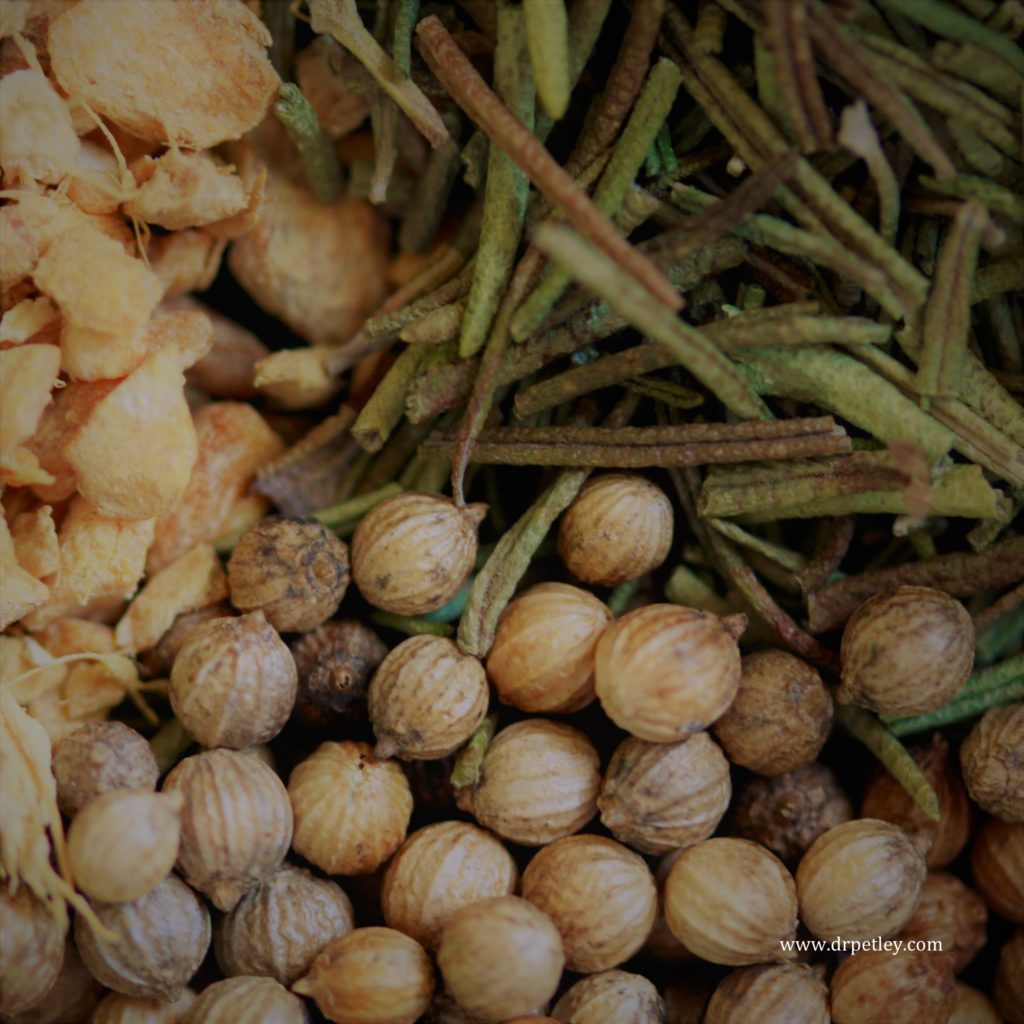
    Fennel, Coriander, and Cumin:  Herbalists classify these spices as carminatives, meaning they help relieve abdominal gas and bloating.  They have a long history of use as an after-dinner remedy either singly or in combination.  My favorite recipe is simple: combine one teaspoon each of the whole seeds of fennel, coriander, and cumin in a small jar.  I like to chew a quarter teaspoon of the blend whenever I overeat and repeat as needed up to four times.  For those who don’t like the idea of seeds getting stuck in their teeth, the same mixture can be made into a tea and sipped after dinner.  To make, place one teaspoon of the blend in eight ounces of just boiled water and steep covered ten minutes.  Strain and enjoy.     

    Sage, Oregano, Thyme: These herbs contain volatile oils that are effective against many viruses and bacteria.  A strong tea of any of these herbs or in combination can be used as gargle for a sore throat.  To make, place one tablespoon of the chosen herb or a teaspoon of each of these in eight ounces of freshly boiled water and steep covered until cool to the touch.  Strain and gargle with a small sip of the tea throughout the day.  Avoid using powdered herbs for this tea because they are difficult to strain well and could feel like swallowing sandpaper.  Some herbalists will dissolve a teaspoon of salt into the strained but still warm tea to further improve the properties of the gargle.  The volatile oils that are carried through the steam of the tea can help with a stuffy nose.  To try this, make the same tea as above (no salt) but instead of covering it while steeping, either breathe in the steam as it rises or create a tent using a cloth towel placed over your head and the shallow pot of the tea.  Breathe in slowly through the nose.

    Keep in mind that when using herbs medicinally they must be of high quality. This means that if your sage was purchased at the turn of the century, it is no longer considered medicinal.  They should be stored in glass jars away from heat, light, and humidity.  These are all factors that cause the aromatic oils to evaporate faster and mar the potential of the herbs.  For optimum flavor and medicinal value, store the seeds and leaves in their whole form and only grind them when needed in a recipe (except for cinnamon, of course, which does not powder easily).  Another reason to store whole herbs and spices is because the powdered form is difficult to strain when making tea.  Using herbs medicinally sometimes means consuming larger doses than a pinch or two at a time, so buy organic when available. 

    Above all, never underestimate the simple or the mundane.

    Dr. Nate Petley is a naturopathic doctor and clinical herbalist.  He offers a three-year herb apprenticeship in Maine and lectures throughout New England sharing his expertise in naturopathic and botanical medicine. Dr. Petley blends the art and science of herbalism in his clinic and classroom, relying on his 20 years of experience studying, wildcrafting, and making herbal medicine.

    Dr. Nate Petley  |  www.drpetley.com  |  2017. All rights reserved.  All text and photos are the property of Nathaniel Petley, ND.
  • Dr. Nate Petley - Harvesting Medicinal Plants - Herbal Preparations - Plant Wisdom

    Roasted Dandelion Root Tea (Part 1)

    Harvesting Dandelion Roots with Dr. Nate Petley

    harvesting-dandelion-roots

    Behold the amazing dandelion!  Not only can we eat the nutritious greens in spring, but we can make a delicious root tea come fall.  Once the fall frosts start, and about the time I’m digging the last of my potatoes and carrots, I keep on the lookout for dandelions in the garden.  I tend to let my dandelions grow throughout the garden and only weed them out if they are interfering with other vegetables and herbs.  In this way, I can select new dandelion leaves and they are produced throughout the summer and it ensures sizeable and easily harvested roots in the fall.  You could say I do my best weeding long after the growing season.

    img_3189

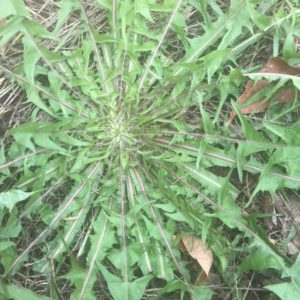
    Dandelions are relatively easy to identify, with their toothed leaves in a basal rosette arising from a long taproot.  They are a member of the Asteraceae family.  The midrib of the leaf and the stem of the flower will produce a milky sap when broken.   Despite their widespread distribution, they have naturalized from Europe.

    Do not collect or use dandelions that come from fields or yards that have been sprayed with chemicals. If harvesting these for the first time, please find a knowledgeable herbalist or botanist who can correctly identify them (in case you have any questions). 

    img_3190

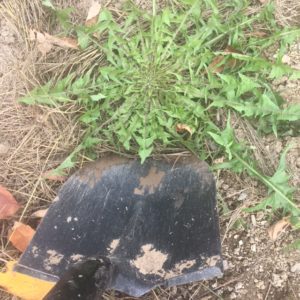
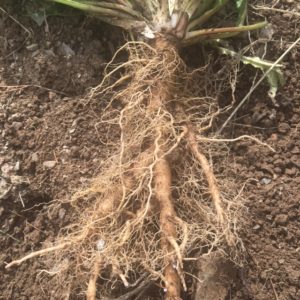
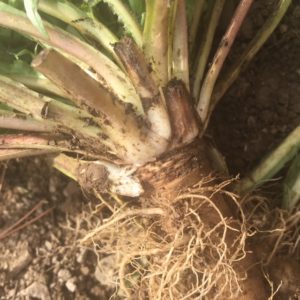
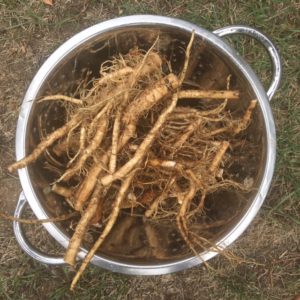
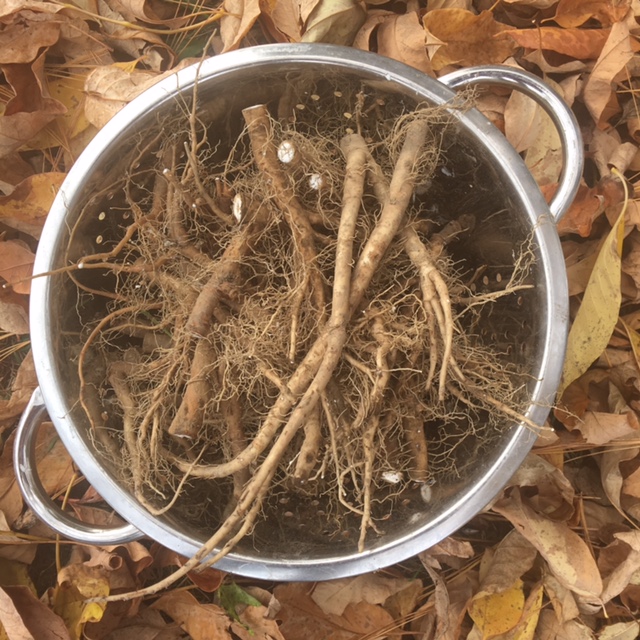
    With spade in hand (a trowel works fine too), lift out the long taproots.  They pull right out once you loosen the soil.  I never worry about over harvesting these from the garden because wherever the root breaks, another plant will grow come spring. 

    img_3194

    In my central Maine soil, the roots are often contorted and branching – signs of rocks and sticks throughout.  I will say that garden grown dandelions are far easier to harvest than their field counterparts.  Digging dandelion roots is a back-breaking job but I find an hour of work in the fall completely worth it when I sip on the roasted dandelion root tea while watching the snow fall all winter.

    fullsizerender4

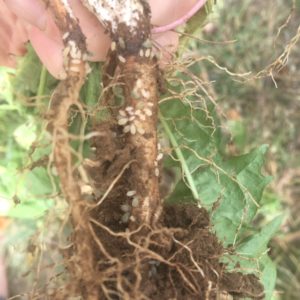
    Upon digging, look for insects that may be living on the roots. It is rare to see something eating the dandelion but this year, as if on cue for the camera, I noticed aphids living among the roots of one plant.  Simply remove surface insects or discard the entire root if there is considerable damage.  Where there is one dandelion, there is often an abundance of them – so I don’t worry about saving every last piece.   

    fullsizerender

    fullsizerender1

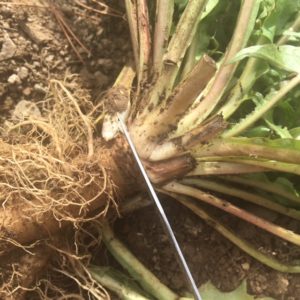
    With a sharp knife, remove leaves at the junction where the root begins.  For root coffee, it is best not to include any portion of the leaves.  However, the leaves here are a fall flush and completely suitable for using as a potherb (sauté or boil).  Some only consume the leaves in early spring because they are more tender and less bitter, but once they start producing leaves again after the drying summer, I can find enough young leaves to throw into a salad (yes, they are bitter!) or to cook up.    

    fullsizerender2

    You may see the bitter milky sap seep from the root.  If it gets on the skin, it can slightly stain the skin brown.  I don’t often distinguish this versus the stains of good garden soil, but either way a good scrub with homemade soap does the trick to clean the hand after harvesting.  Folk lore indicates that this latex has been used to help remove warts when applied daily.  While I haven’t seen this to be effective in the clinic, I do love to propagate lore about the medicinal use of herbs.  

    fullsizerender3

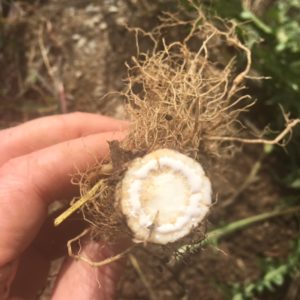
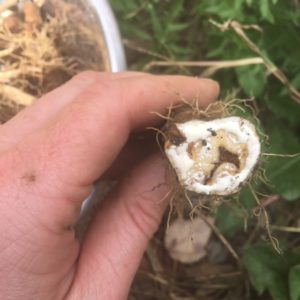
    Be on the lookout for root rot or signs of overwintering insects in the larger, fleshy portions of the root.  Simply cut out the section or discard the entire root. Older roots are more likely to split and create cavities that fill with soil and it is not uncommon to see earthworms tucked up inside.

    fullsizerender6

    What I’ve learned over the years is that I need to harvest double the amount I think will be enough.  It never is.  When you get tired of digging or truly think you have enough, sort through the roots to remove leaves, sticks, foreign plant material, rocks, and insects.  Shake off as much soil as possible.  Wash thoroughly because there will be soil in all the tiny crevices.  I do this outdoors.  An easy approach is to fill a bucket with water and swish and dunk the roots while inspecting them again.  One can never be too careful!  I will change the water several times as the soil falls off and muddies the water.  Place them in a colander for a final rinse. 

    At this point, there are many options for using and preserving these roots for winter use.  They can be made into dandelion root tea either in this fresh state or dried to use later in the year.  They can be made into a tincture.  My favorite way to process these roots in the fall is to roast them.  The smaller roasted roots make a tasty and bitter pre-dinner digestive stimulant and the larger roots can be ground down with a mortar and pestle to make ‘root coffee’ (this beverage goes by many names).  To learn how I make roasted root tea, see Part 2!

    Dr. Nate Petley is a naturopathic doctor and clinical herbalist.  He lecturers throughout New England sharing his expertise in naturopathic and botanical medicine. Dr. Petley blends the art and science of herbalism in his clinic and classroom, relying on his 20 years of experience studying, wildcrafting, and making herbal medicine.

    Dr. Nate Petley  |  www.drpetley.com  |  2016. All rights reserved.  All text and photos are the property of Nathaniel Petley, ND.
     

  • Maine Center for Natural Health - Plant Wisdom

    Happy Flowers

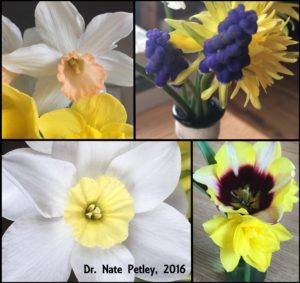
    Sometimes it’s the little things in life that puts a smile on our faces.  I did a little experiment in the office.  Actually, it was quite by accident and more of an observation.  Each week I put fresh flowers on my desk because my philosophy is that if I can’t be in the garden, I’ll bring the garden to me.  Flowers make me happy and what I observed these past few weeks is that they make my patients happy, too. 

    Each week I walk my gardens in search of one or two stems to place in a small vase that sits on my office desk.  Each small bouquet brought out smiles and stories.  Some would comment as soon as they walked in at how beautiful the flowers were.  Eyes got big and teeth would show.  Some would smell the blooms to see if they produced any scent.  Some touched the soft and delicate petals to confirm they were real.  My favorite reactions were the stories that patients shared about their favorite flower or how they loved to pick flowers as a child with a family elder. 

    The point of my observation is that there is great healing in the tiniest of flowers.  A single stem can lighten the soul and soften the heart. That spark of joy created by a flower is a powerful thing.  Even if for a fleeting moment, flowers can remove heavy burdens.   

    When was the last time you placed a flower on your desk at work or at home just because?

    Every day is a celebration.  Every day we must find a reason to smile and who can resist smiling at a beautiful flower?  Apparently not my patients!

    Dr. Nate Petley

    Naturopathic Doctor and Clinical Herbalist

    www.drpetley.com

    Desk Flowers 2016

    © Dr. Nate Petley, 2016